MARYLAND’S STATE WILDLIFE MANAGEMENT PLAN

Screen shot 2020-07-08 at 5.23.27 PM.png

Some Maryland hunters may not be familiar with Maryland’s State Wildlife Management Plan.  This Plan is required by the federal government, in exchange for certain financial support, and covers a management period from 2015 through 2025.  The plan itself is shown via the link below followed by a brief explanation of the purpose/intent of the Plan.


https://dnr.maryland.gov/wildlife/Documents/SWAP/2005_MWDC_Plan.pdf


State Wildlife Action Plans serve as the blueprints for conserving our nation's fish and wildlife and preventing endangered species. In 2005, each state, territory and the District Columbia submitted their plan for approval to the US Fish and Wildlife Service as a condition for receiving funding through the State and Tribal Wildlife Grants program. The plans were recently updated with the latest science and information to guide conservation of over 12,000 species in greatest conservation need. Each plan addressed 8 required elements laid out by the US Congress. The plans were developed in collaboration with leading scientists, conservationists, private landowners and other citizens. Although progress is being made, many species of fish and wildlife continue to decline because funding is inadequate. Currently, ~$61 million is appropriated annually by Congress to the 56 states, territories and the District of Columbia to implement the plans. A survey by a natural resources economist estimated that $1.3 billion is needed annually to implement the plans. The Blue Ribbon Panel on Sustaining America's Diverse Fish and Wildlife Resources reviewed funding options and recommended that existing royalties and fees from the development of energy and mineral resources on federal lands and water be invested in the implementation of State Wildlife Action Plans. The Alliance for America's Fish and Wildlife is leading the campaign to secure increased and dedicated funding by supporting passage of the Recovering America's Wildlife Act.


https://www.fishwildlife.org/afwa-informs/state-wildlife-action-plans


UPDATE:  On July 1, 2020 – ironically, the same day Maryland’s BPW reduced funding for WHS as explained in this same section of HOM’s website, the Congressional Sportsmen’s Foundation issued a Press Release announcing legislative victory for the above mentioned Recovering America’s Wildlife Act as shown below.


CSF Leads Effort to Secure Passage of Historic Recovering America's Wildlife Act

July 1, 2020 (WASHINGTON, D.C.) - Building off of the Senate's recent passage of the Great American Outdoors Act, the Congressional Sportsmen's Foundation (CSF) led the effort to secure House passage of the bipartisan Recovering America's Wildlife Act (H.R. 3742) as part of H.R. 2, the Moving Forward Act.


The Recovering America's Wildlife Act (RAWA) was adopted as part of H.R. 2 on a voice vote, a sign of the strong bipartisan support for this legislation. This achievement marks a historic step to providing nearly $1.4 billion in unprecedented funding for nearly 12,000 at-risk species.


RAWA was introduced earlier this Congress by Congressional Sportsmen's Caucus (CSC) Vice-Chair Representative Debbie Dingell (MI) and CSC member Representative Jeff Fortenberry (NE). Prior to the successful vote earlier today, CSF played a leading role in securing the inclusion of RAWA as part of H.R. 2 through alerts and strategic outreach to key CSC members in the House. CSF alsohelped lead a letter, which was signed by a strong contingent of more than 250 of the nation's top conservation organizations, in support of advancing the Recovering America's Wildlife Act as a means to stimulate the economy.


"As the Legislative Co-Chair of Alliance for America's Fish and Wildlife, I am grateful for the leadership and commitment of Representatives Dingell and Fortenberry," said CSF President Jeff Crane. "The passage of Recovering America's Wildlife Act out of the House represents the most significant investment in state and tribal fish and wildlife conservation in the last two decades, and we are now shifting our efforts to passing RAWA out of the Senate and then over to the President's desk to be signed into law."


The Recovering America's Wildlife Act will authorize $1.397 billion for a period of 5 years to expand our recreational infrastructure, restore our natural resources, and invest in on-the-ground projects in every state and territory, and on tribal lands. Specifically, the funds authorized by RAWA will strengthen the capacity of state fish and wildlife agencies as the primary managers of our nation's fish and wildlife to conduct proactive conservation efforts by providing financial assistance to fully implement their Congressionally mandated State Wildlife Action Plans.


As a component of H.R. 2, the Recovering America's Wildlife Act awaits further action in the Senate.


###


Since 1989, the Congressional Sportsmen's Foundation (CSF) has maintained a singleness of purpose that has guided the organization to become the most respected and trusted sportsmen's organization in the political arena. CSF's mission is to work with Congress, governors, and state legislatures to protect and advance hunting, angling, recreational shooting and trapping. The unique and collective force of the Congressional Sportsmen's Caucus (CSC), the Governors Sportsmen's Caucus (GSC) and the National Assembly of Sportsmen's Caucuses (NASC), working closely with CSF, and with the support of major hunting, angling, recreational shooting and trapping organizations, serves as an unprecedented network of pro-sportsmen elected officials that advance the interests of America's hunters and anglers.


Spring Hunters Harvest a Record 4,303 Wild Turkeys

33809917588_23bebb5dc7.jpg

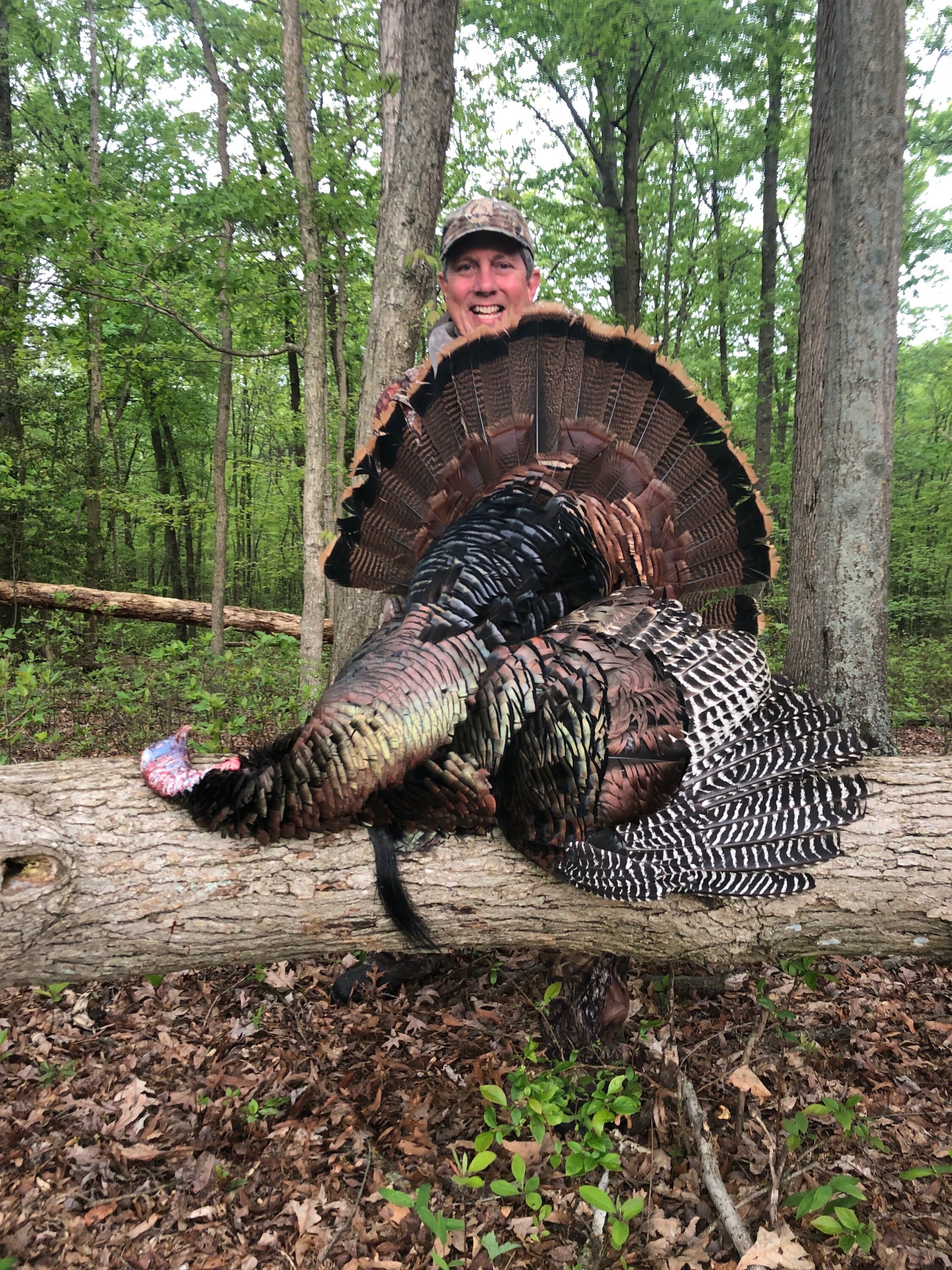
Maryland hunters reported harvesting 4,303 wild turkeys during the 2020 regular spring and junior hunt turkey seasons, the Maryland Department of Natural Resources announced. This year’s harvest surpassed the previous high of 4,175, set in 2017, and was 8% higher than the 2019 harvest of 4,002 turkeys.

“This year’s harvest suggests that many hunters took advantage of abundant turkey populations in much of the state,” Wildlife and Heritage Service Director Paul Peditto said. 

The percentage of juvenile turkeys or “jakes” reported in the harvest (24%) was at its highest level since the 2012 spring season. This supports other survey data showing that the summer of 2019 was an excellent year for turkey production and boosted populations significantly.

Turkey numbers have also grown and expanded in many areas where they have not traditionally been abundant. Record-high harvests were reported in nine counties – Baltimore, Caroline, Cecil, Charles, Frederick, Kent, Montgomery, Prince George’s, and St. Mary’s.

Washington County reported the highest harvest this year with 439 turkeys, followed by Garrett County with 387 and Charles County with 369.

Youth hunters kicked off the spring turkey season statewide on April 11 with the Junior Turkey Hunt. An additional junior hunting opportunity occurred on April 12 in select counties. In total, junior hunters harvested 248 wild turkeys, a 22% increase from last year’s junior hunt weekend.

Total harvests by county are below:

County

2016

2017

2018

2019

2020

Allegany

256

293

250

278

286

Anne Arundel

45

58

49

74

81

Baltimore

52

51

55

56

65

Calvert

73

59

76

68

82

Caroline

172

149

135

152

180

Carroll

76

103

103

73

93

Cecil

69

87

69

89

94

Charles

265

320

336

348

369

Dorchester

274

303

212

221

211

Frederick

299

332

313

304

348

Garrett

387

429

412

429

387

Harford

110

127

105

124

88

Howard

34

24

36

33

34

Kent

181

174

168

166

206

Montgomery

94

135

149

135

162

Prince George’s

87

91

76

105

109

Queen Anne’s

190

160

115

145

144

Somerset

150

163

145

129

171

St. Mary’s

188

202

191

188

226

Talbot

88

94

80

87

95

Washington

355

426

459

414

439

Wicomico

206

175

139

155

193

Worcester

223

220

188

229

240

Statewide

3,874

4,175

3,861

4,002

4,303

https://news.maryland.gov/dnr/2020/06/04/spring-hunters-harvest-a-record-4303-wild-turkeys/

Free Fishing Days Scheduled in June and July

The Maryland Department of Natural Resources offers license-free fishing days on June 6, June 13, and July 4 — a free option to explore Maryland’s diverse and unique fishing experiences without needing a fishing license, trout stamp, or registration.


Following Governor Hogan’s announcement of Stage One of the ‘Maryland Strong: Roadmap to Recovery,’ the state has expanded opportunities for outdoor exercise and recreation in the state. Anglers are advised to follow social distancing and other precautions as outlined in the department’s update regarding Maryland outdoor recreation.


Maryland hosts license-free fishing days annually on the first two Saturdays in June and on the Independence Day holiday. On these days, any individual may catch and possess finfish in any tidal and nontidal waters of Maryland, as long as it’s for recreational purposes. All anglers must follow current size and catch limits found in the department’s fishing and crabbing guide.


The department also has dozens of other resources to help new or experienced anglers, including angler access maps, Click Before You Cast environmental monitoring reports, and fish identification charts.


Aside from these free fishing days and certain license-free areas, anyone 16 or older fishing in Maryland must possess a license, which can be obtained or renewed online or on the department’s mobile app. During the current State of Emergency, Governor Hogan has granted a grace period for anyone whose valid license has expired since March 5, 2020.

46791285025_a9affbbac4.jpg

Migratory Game Bird Hunting Seasons Submitted for Final Approval

After receiving and reviewing public input, theMaryland Department of Natural Resourceshas selected the state’s 2020-2021 migratory game bird hunting seasons. These selections are now awaiting final approval from the U.S. Fish and Wildlife Service.


“We would like to thank all the members of the public who took the time to comment on our proposed 2020-21 migratory game bird hunting season dates and bag limits,” Waterfowl Project Manager Josh Homyack said. “Whether they attended one of the public meetings or commented online, the participants demonstrated how strongly they are invested in protecting this resource and maintaining the waterfowl hunting experience.”


Highlights of the department’s recommendations include:


Youth and veteran waterfowl hunting days on Nov. 7, 2020 and Feb. 6, 2021. In addition to youth age 16 and younger, military veterans and members of the Armed Forces including the National Guard and Reserves on active duty (other than for training) may now participate;


Regular duck hunting season segments from Oct. 10 – 17, Nov. 14 – 27 and Dec. 15 – Jan. 30, 2021 with a daily bag limit of six, including two canvasbacks;


Migratory Atlantic Population Canada goose hunting segments from Dec. 18 – Jan. 2, 2021 and Jan. 13 – Jan. 30, 2021, with a daily bag limit of one;


The special season for sea ducks in the designated zone from Oct. 31 – Jan.8, 2021; and


Mourning dove season segments from Sept. 1 – Oct. 17, Oct. 24 – Nov. 27, and Dec. 19 – Jan. 9, 2021.


The complete list of recommended migratory game bird seasons can be found online and, once finalized, will appear in the 2020-2021 Maryland Guide to Hunting and Trapping and on the department’s hunting webpage.


Licenses, stamps, and permits may be purchased online or by phone at 855-855-3906.


Hunters with questions may contact the Maryland Department of Natural Resources Wildlife and Heritage Service at 410-260-8540.

24483508134_514ef9b81f.jpg